

Website requirements for Australian medical & allied-health practices
A practical checklist for clinic owners and practice managers - what a compliant, patient-first healthcare website actually needs, from AHPRA-aware content to accessibility and online bookings.
Fady Ilias
Director, Web Divine

If you run a GP clinic, dental surgery, physiotherapy practice or any allied-health service, your website is doing more work than you probably realise. It is often the first impression a patient forms of your care - before they ever walk through the door or pick up the phone.
Getting it right is not just about looking professional. Healthcare sites carry expectations that a typical business website does not: careful language around what you can and cannot claim, respect for patient privacy, accessibility for older and less able users, and a booking experience that removes friction rather than adding it.
This is a practical guide to what a modern Australian clinic website needs. Use it as a checklist when you plan a new site or audit the one you have.
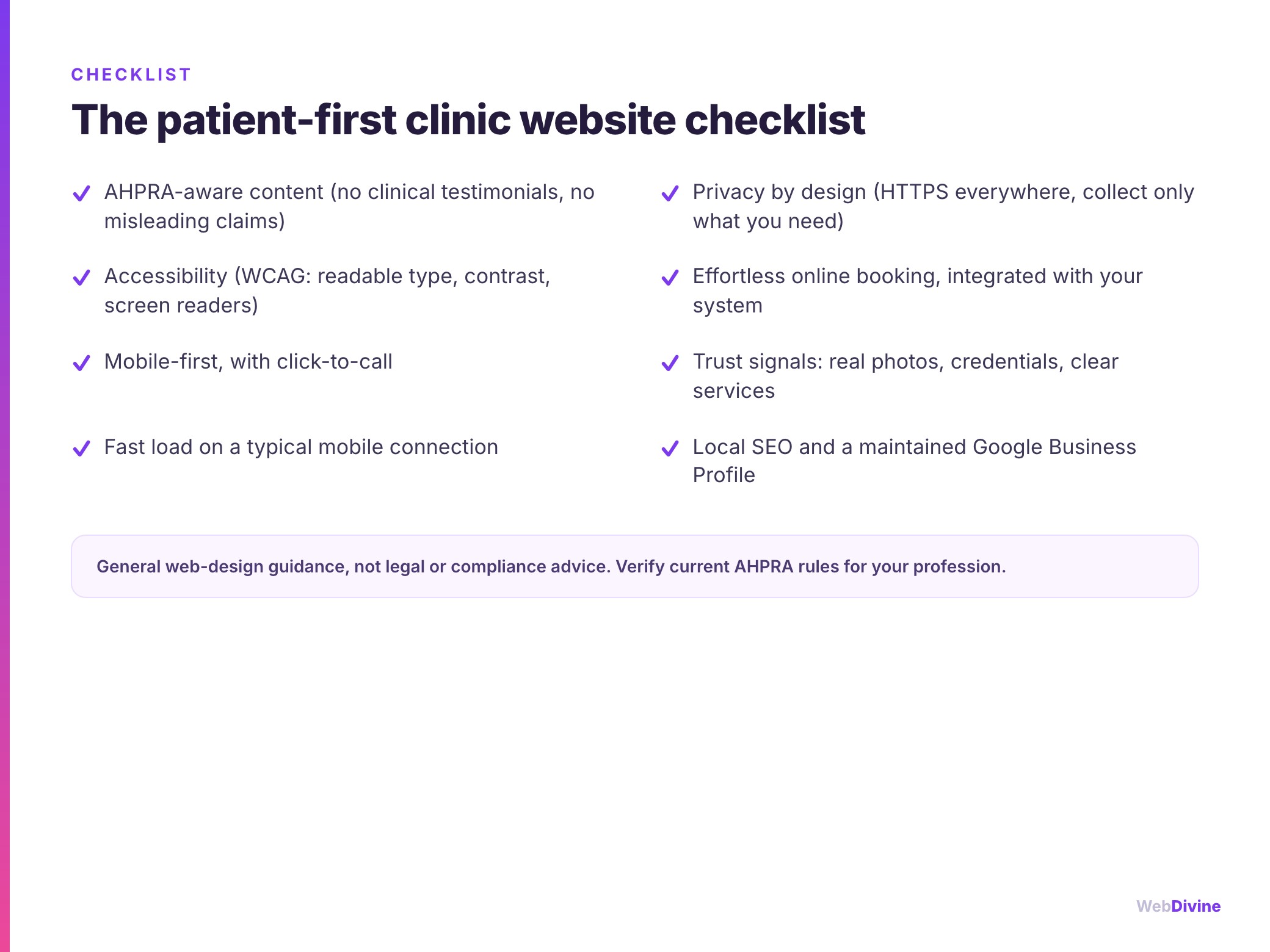
A note before we start. This article is general web-design guidance, not legal, medical or compliance advice. Advertising rules for regulated health services change, and the specifics depend on your profession and situation. Always check the current AHPRA and Ahpra-board guidance that applies to you, and seek your own professional advice before you publish.
Start with AHPRA-aware content
Registered health practitioners in Australia advertise under national law and AHPRA guidance, and that shapes what your website can say. You do not need to become a compliance expert, but you and whoever writes your site should be aware of a few broad principles.
At a general level, health-service advertising is expected to be truthful and not misleading. In practice, that tends to mean being careful with content such as:
- Patient testimonials or reviews about clinical or therapeutic services. These are treated differently from ordinary business reviews, so many practices keep clinical testimonials off their own site entirely and lean on other trust signals instead.
- Claims of superiority or guaranteed outcomes - language that promises results, or positions you as "the best", invites scrutiny.
- Anything that could create unrealistic expectations or encourage unnecessary treatment.
The safest approach is to describe your services factually - what you offer, who it helps, what a patient can expect from an appointment - and to avoid persuasive claims that stray into regulated territory. A good agency will build your site so trust comes from clarity, credentials and professionalism rather than from claims that put you at risk.
Because these rules are nuanced and change over time, treat the above as awareness, not a rulebook. Confirm the current requirements for your profession before you write a word of clinical copy.
Protect patient privacy by design
Even a simple clinic website usually collects some personal information - a name, an email, a phone number, sometimes a reason for the visit. Handling that responsibly is both an expectation and a trust builder.
Practical foundations include:
- A clear, accessible privacy policy that explains what you collect, why, and how it is stored and used.
- Secure transmission (HTTPS) across the whole site, not just the booking page.
- Sensible form design - only ask for what you genuinely need at the enquiry stage, and avoid collecting detailed health information through an open web form unless it is properly secured.
- Trusted third-party tools for bookings and communications, configured so patient data is handled appropriately.
If your booking or intake process touches health information, that raises the bar again. This is another area where you should confirm your obligations rather than assume - but the design principle is simple: collect less, secure what you do collect, and be transparent about it.
Build for accessibility from the start
Healthcare serves everyone, including older patients, people with low vision, and those using screen readers or navigating by keyboard. An inaccessible site quietly turns these patients away - and accessibility is increasingly an expectation rather than a nice-to-have.
Aim to align with recognised accessibility standards (the WCAG guidelines are the common benchmark). In everyday terms, that means:
- Readable type - generous font sizes and strong colour contrast, so a 70-year-old can read your opening hours without squinting.
- Clear structure - proper headings, logical order, and descriptive links rather than "click here".
- Keyboard and screen-reader support - every important action reachable without a mouse, and images given meaningful alt text.
- No reliance on colour alone to convey meaning, and no tiny tap targets on mobile.
Accessibility overlaps almost entirely with good design. Build it in from the start and you get a site that is easier for all patients to use - not just those with specific needs.
Make online booking effortless
For most clinics, the single biggest job of the website is to turn interest into a booked appointment. If a patient has to hunt for how to book, or is forced to call during business hours, you lose the ones who found you at 9pm on their phone.
Strong booking experiences share a few traits:
- An obvious, repeated "Book" action on every page and in the header.
- Integration with your existing practice-management or booking system, so appointments land where your team already works.
- A short path to confirmation - the fewer steps between "I want an appointment" and "done", the more bookings you keep.
- A clear alternative for people who prefer to phone, with a click-to-call number on mobile.
The goal is not to force everyone online. It is to give patients the choice, and to make the online path so smooth that most of them take it. We designed exactly this kind of frictionless journey for practices like Wells Road Medical Centre, where the booking step is never more than a tap away.
Design mobile-first
A large share of clinic visitors arrive on a phone, often searching for a nearby practice in the moment they need one. If your site is awkward on mobile - text too small, buttons too fiddly, the phone number buried - you are losing patients at the exact point of intent.
Mobile-first means the phone experience is the priority, not an afterthought:
- Tap-friendly buttons and click-to-call numbers.
- Opening hours, location and booking visible without endless scrolling.
- Fast loading on a typical mobile connection.
Which brings us to the next point.
Earn trust with the right signals
Choosing a healthcare provider is a decision built on trust. Your site needs to reassure patients quickly - and, given the constraints around clinical testimonials, it has to do so without leaning on the usual review wall.
Trust signals that work well for clinics include:
- Real photography of your practice, team and space - not generic stock.
- Practitioner profiles with genuine qualifications, registrations and areas of focus.
- Plain-language service descriptions that set clear expectations.
- Clear location, parking, accessibility and hours information.
- A professional, calm design that signals quality and care.
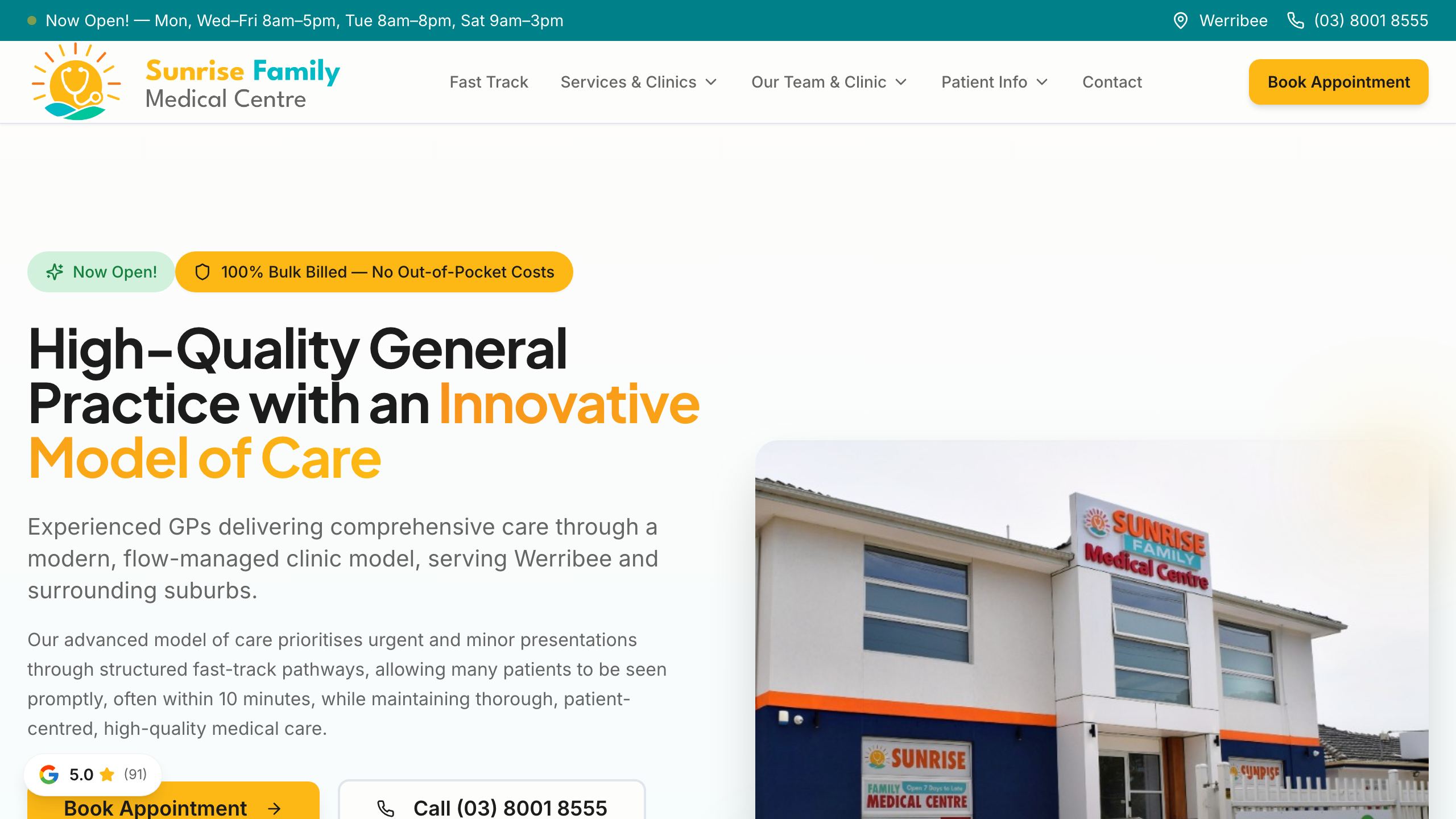
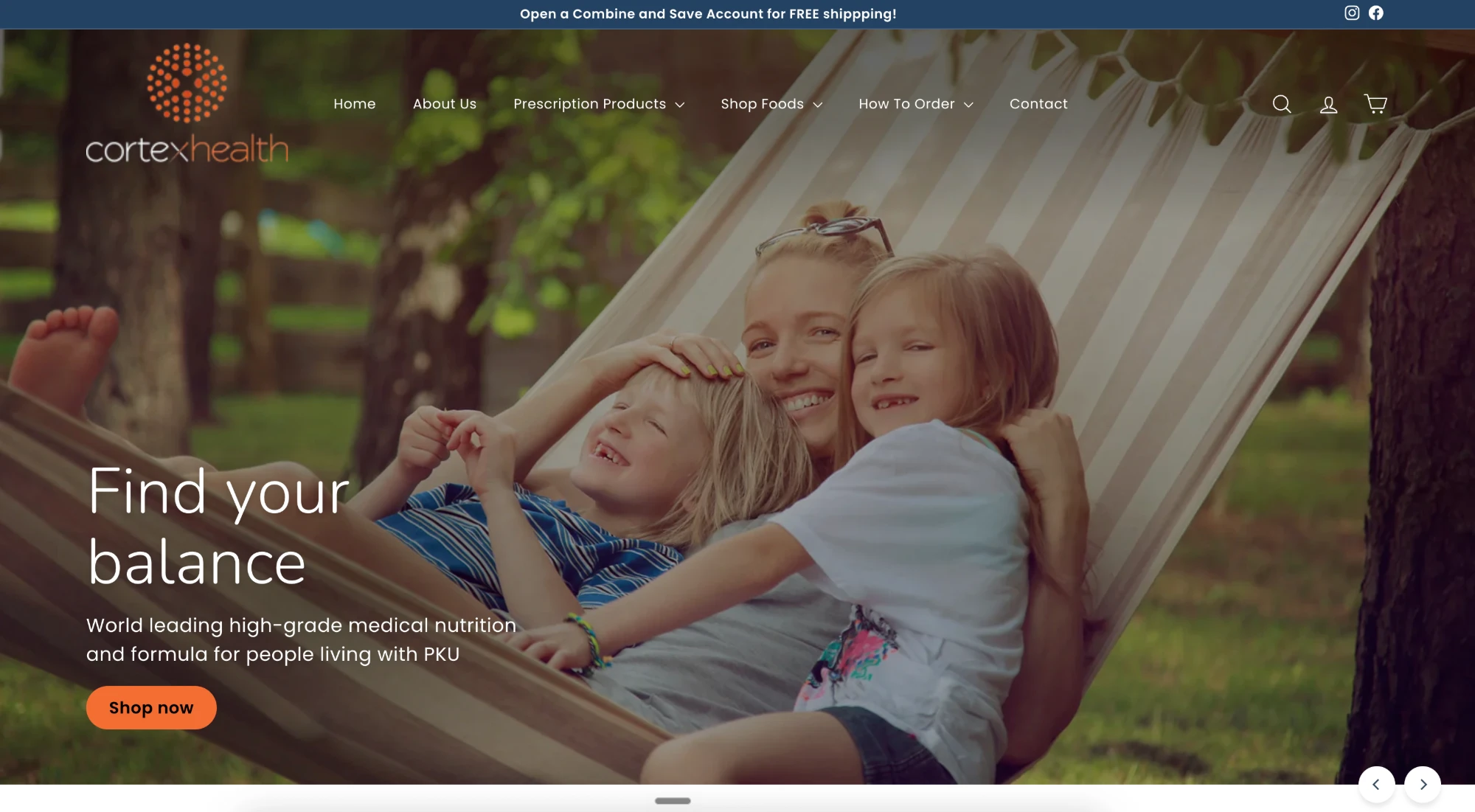
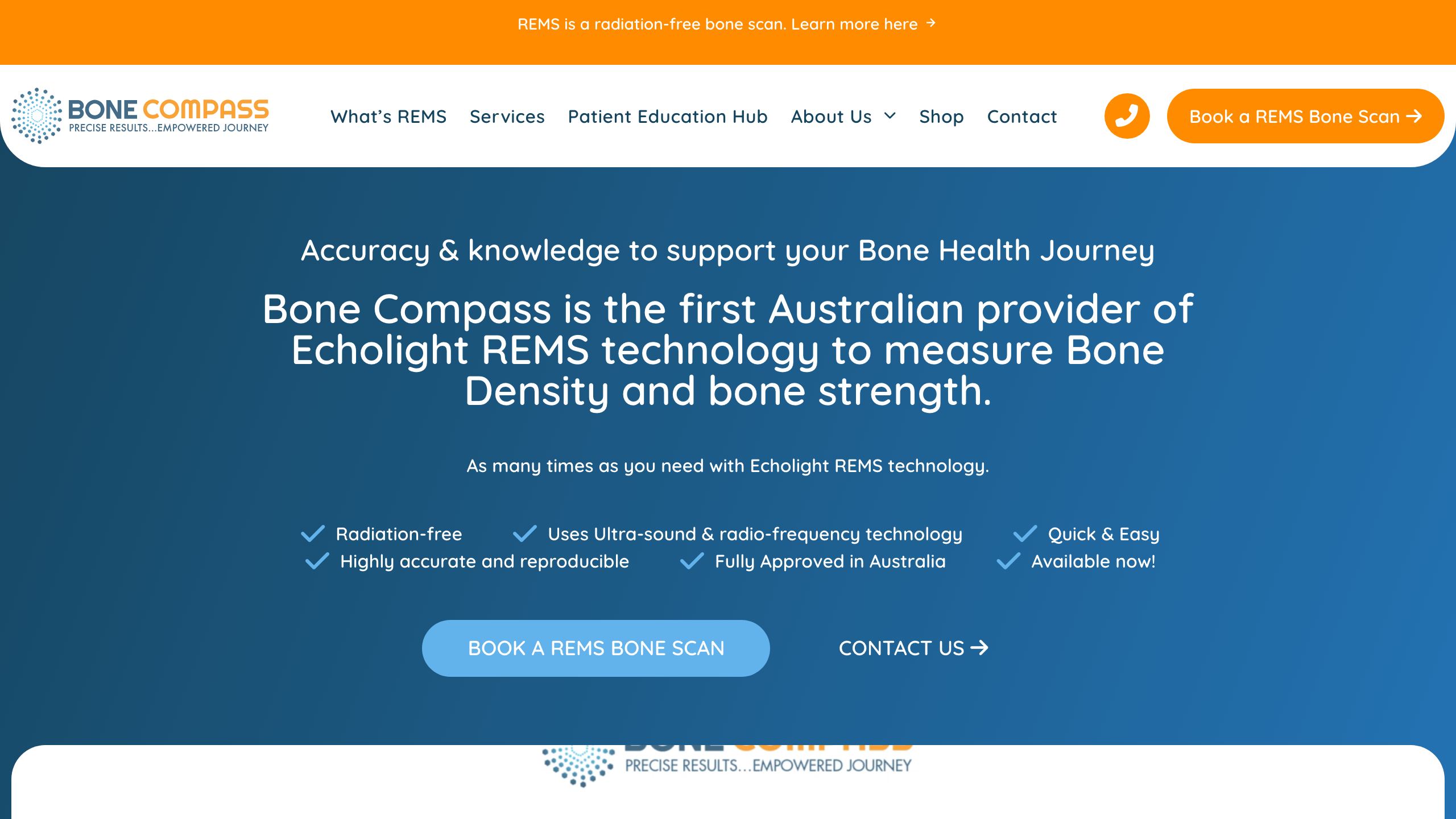
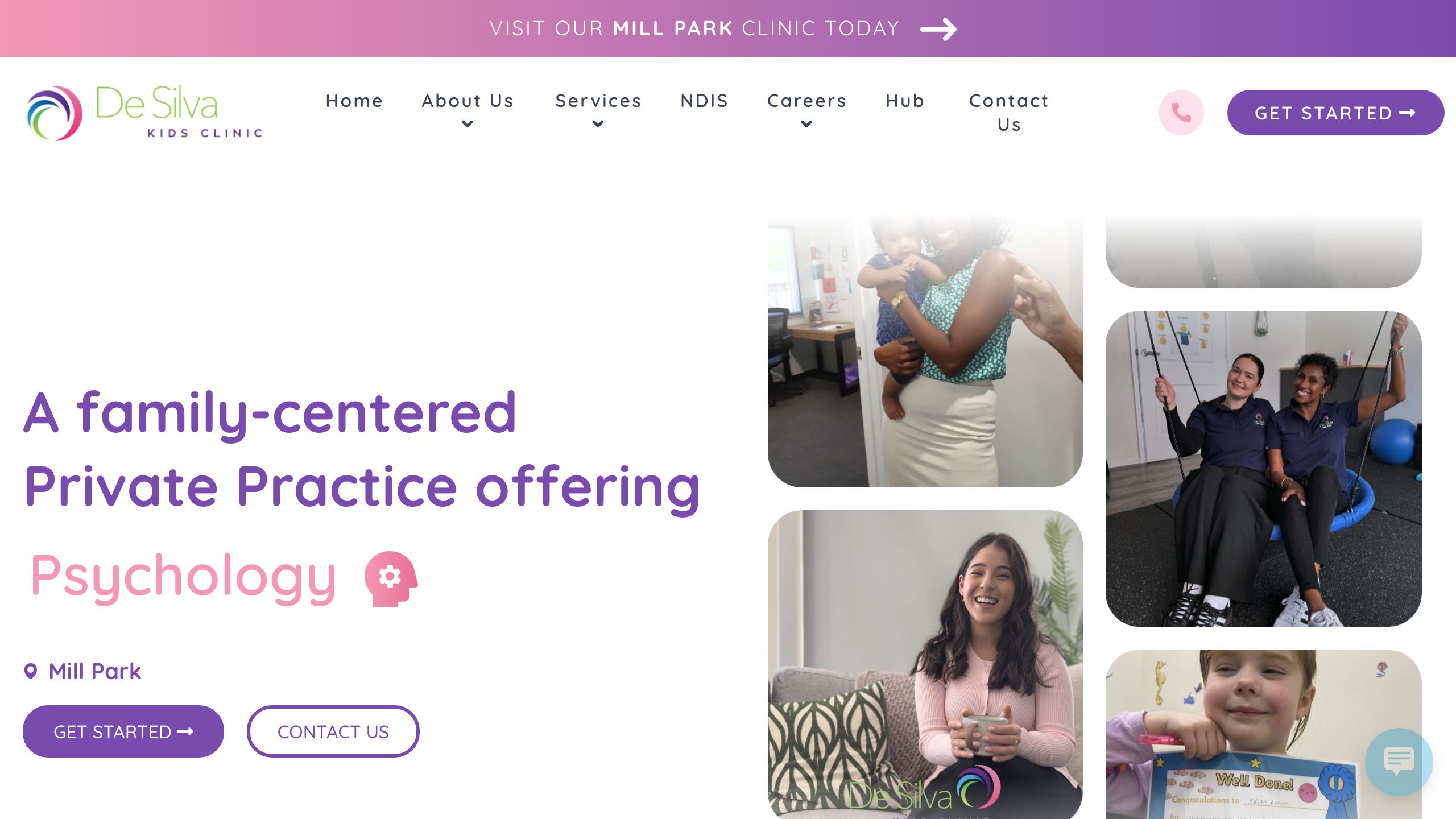
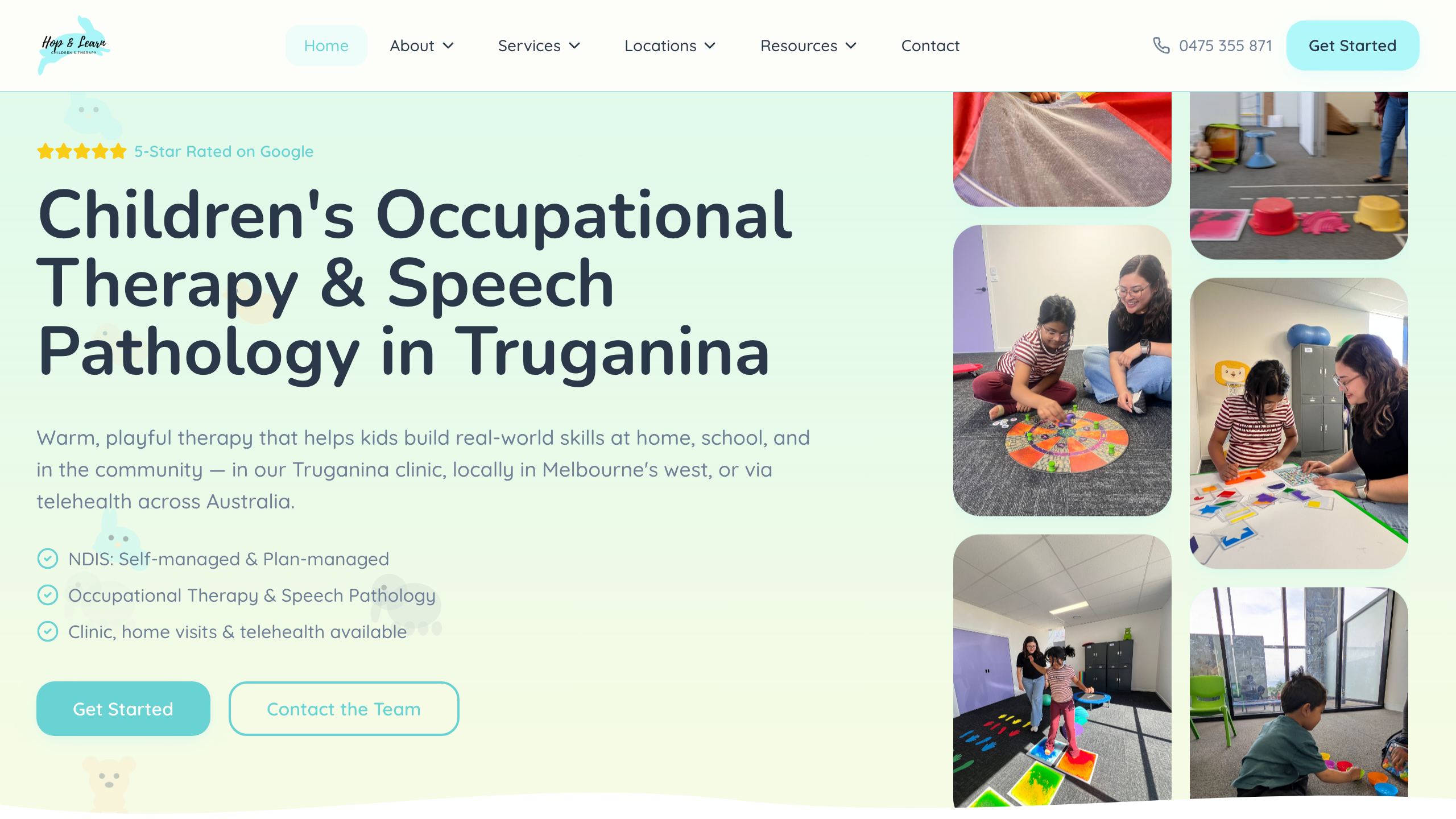
Done well, these do more for patient confidence than any testimonial could. Our work with clinics such as Oak Park Medical Centre and Sunrise Family Medical Centre leans heavily on this kind of quiet, credible reassurance.
Make speed and local SEO non-negotiable
Two technical foundations underpin everything above.
Speed. A slow site loses patients before they see your offer, and search engines factor page speed into rankings. Fast, well-engineered pages are table stakes, not a luxury.
Local search. Most clinics live or die on local visibility - the patients searching "physio near me" or "GP in \[suburb\]". A well-structured site, consistent practice details, and a properly maintained Google Business Profile all help you show up when it matters.
Bringing it together
A strong clinic website is not a brochure. It is an accessible, trustworthy, fast, mobile-first tool that respects patient privacy, stays on the right side of advertising expectations, and makes booking effortless.
Get the foundations right - clear content, privacy by design, accessibility, easy bookings and genuine trust signals - and your website stops being a box you tick and starts being a member of your front-of-house team.
Keep reading: once the foundations are right, healthcare web design that fills your books covers turning those visitors into booked patients.
We build patient-first websites for GP clinics, dental and allied-health practices as our healthcare web design specialty, backed by senior people on every project and no junior hand-offs. If you want a site that gets the fundamentals right, start a conversation with us - we will give you an honest view of where your current site stands and what it would take to fix it.
Written by
Fady Ilias
Director, Web Divine
Fady Ilias is the director of Web Divine, a senior-led web design and development studio in Melbourne. He works hands-on with Australian businesses on conversion-focused websites, Shopify stores and custom web apps - senior people on every project, no junior hand-offs.
More about Web DivineKeep reading
More insights

Law Firm Advertising Rules & Your Website (Australia)
Your marketing is regulated in ways most web agencies have never heard of. An awareness-level tour of the rules that should shape every claim, testimonial and title on a law firm website.

Healthcare web design that fills your books
Traffic is not the goal - booked appointments are. Here is how conversion-focused healthcare web design turns clinic site visitors into patients who actually book.

Your privacy policy has a new deadline: automated decisions from 10 December 2026
From 10 December 2026, many Australian businesses must explain in their privacy policy where software, AI or even a spreadsheet makes significant decisions about people. Here is who it applies to and what to do before the deadline.









Let's talk about your project
Book a call with the people who would actually build it. You'll get straight answers on scope and timeline, and a fixed quote once the project is scoped.